The Ingredient Behind Most Hair-Dye Allergic Reactions: the #1 hair-dye allergen has a name, and it's still in nearly every box on the shelf
It's legal. It's regulated. And one brand finally left it out.
 Dr. Amelia Hartwell, MDDermatology, Medical ReviewerUpdated August 31, 2026 · 5 min read
Updated August 31, 2026 · 5 min read
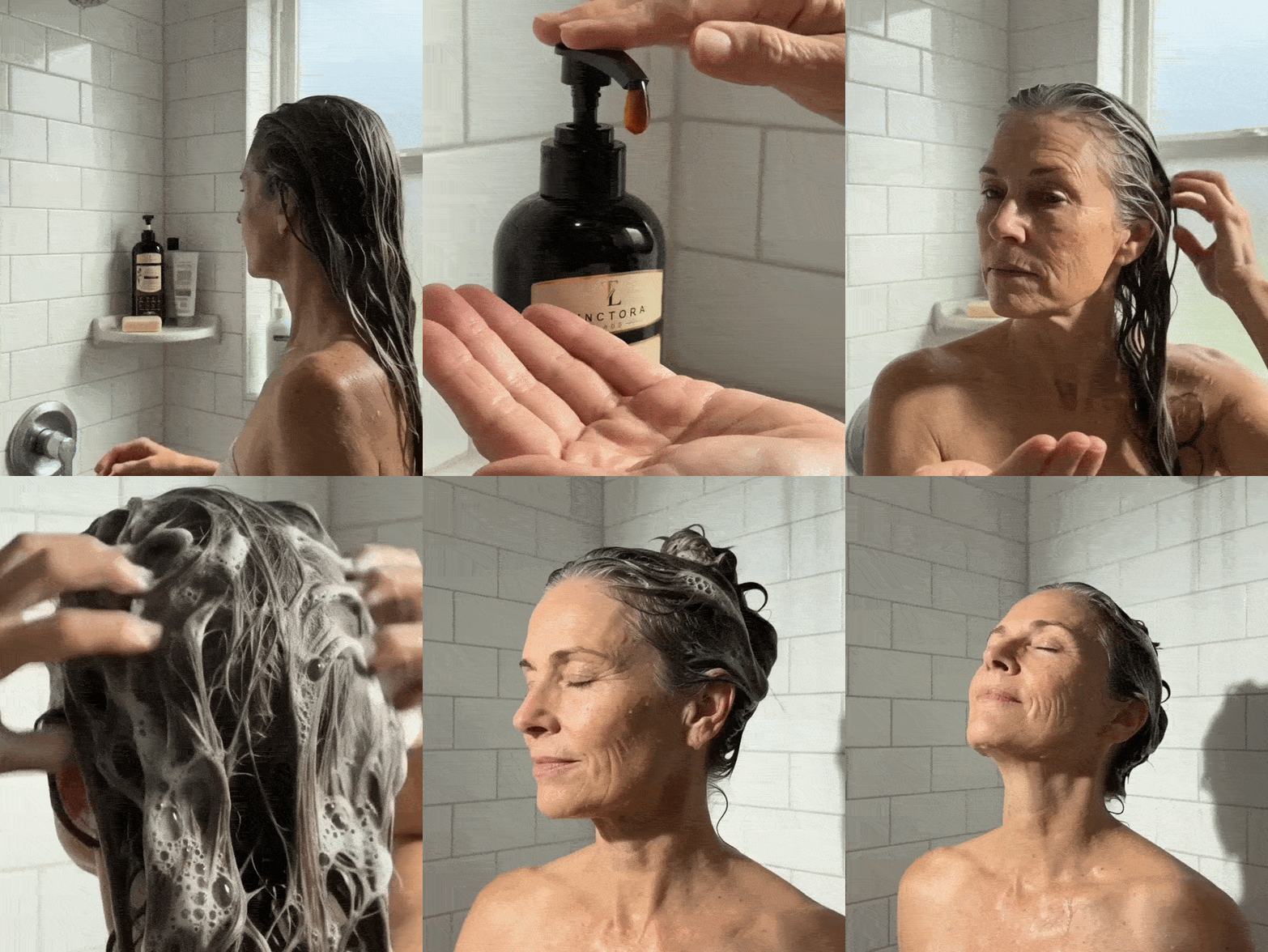
Maybe it happened once, years ago. Maybe it happened last month. A burning scalp. Swollen eyes. A reaction that sent you looking up symptoms at 2 a.m. And somewhere in that search, someone told you the truth nobody wants to hear: you might not be able to safely dye your hair again. So you stopped. Not because you wanted to go gray. Because the alternative scared you more.
You're not imagining how bad it can get
These are the words people use when they describe what a dye reaction actually felt like.
"the washing it out made my scalp burn and my eyes start to puff"
"like a chemical peel over my head, it was awful and so sore"
(These are real, published accounts from public hair-dye discussion forums, not Tinctora customers, quoted here to show how common and how serious these reactions are. Sources available on request.)
The ingredient with a name
Here's the part almost no drugstore employee will tell you: the #1 hair-dye allergen has a name, and it's in nearly every box of permanent color on the shelf. It's called PPD, short for para-phenylenediamine. It's what most dark, long-lasting hair color is built on, and it's the single most common cause of hair-dye allergic reactions. Regulators in Europe have restricted how much of it can legally be used, capped at 2% in the finished, ready-to-use dye.

The Research (real sources, not an invented study)
- 1
PPD is the #1 hair-dye allergen. ~6.2% positivity among patch-tested dermatitis patients in North America. Cureus 2024, PMID 38738072.
- 2
EU regulatory cap. PPD restricted to 2% free base in the ready-to-use oxidative dye. EU Cosmetics Regulation (EC) 1223/2009, Annex III.
- 3
Skin-barrier impact. PPD downregulates tight-junction and cornified-envelope proteins. Meisser et al. 2020, JACI, DOI 10.1016/j.jaci.2019.11.023.
- 4
Resorcinol flag. Proposed by French regulator ANSES as a proven endocrine/thyroid disruptor; EU-restricted and must be labeled.
PPD, resorcinol, and aminophenols are EU-restricted, not banned. Individual reactions vary; a patch test is still recommended before using any hair color product, including Tinctora.
2%
EU Cap on PPD
Day 7
First Results Typically Seen
0
PPD in Tinctora
60
Day Guarantee
What Tinctora leaves out
Tinctora is formulated without PPD, without resorcinol, and without the aminophenol sensitizers that oxidative hair dye is typically built on. Not "low," not "reduced." Not in the formula.
(Patch test before first use, as with any hair color product, including Tinctora. This describes ingredients Tinctora does not contain, not a guarantee against all possible reactions.)
Gentle doesn't mean it doesn't work
Most people notice their gray starting to blend by day 7. Full coverage typically lands between day 15 and day 21. Results vary by hair type and starting gray percentage, this isn't an instant transformation, and we won't tell you it is.

Day 1

Day 7

Day 21
(Real customer, same routine the whole way through, 2 to 3 washes a week. Results vary by hair type and starting gray percentage.)
Real Experiences
Jane S.
Verified Buyer
"I'd reacted to box dye twice before and was done with it. Did a patch test first, no issues, and the color came in even over about two weeks."
M. Torres
Verified Buyer
"What got me was seeing 'no PPD' actually explained instead of just printed on a label. Takes patience but it worked without any burning."
Where this leaves you
- 1
Keep avoiding hair dye entirely because of a reaction you've had before, and stay stuck choosing between covered gray and a product you trust.
- 2
Try a formula built specifically without the ingredients most linked to that reaction, patch test first, same as you should with anything.
Either is a reasonable choice. This page exists so the decision is an informed one, not a guess.
3 Bottles, About 6 Months of Coverage
$19.83/mo$29.50/mo
A single bottle works out to $29.50/mo, the 2-pack brings it to $23.50/mo, and the 3-bottle No-Roots Set brings it down to $19.83/mo. Auto-Refill keeps that price locked and ships on your schedule, cancel any time.
60-Day Full Coverage Guarantee - every cent back if it doesn't cover your gray
Shop The No-Roots Set →Questions people actually ask
- How do I know if I'm allergic to PPD?
- The only reliable way is a patch test before you use any hair dye. Reactions can also develop even after years of dyeing without a problem, so a clean history isn't a guarantee. If you've ever had burning, itching, or swelling after coloring your hair, talk to a dermatologist before your next application.
- How long until I see results?
- Most people notice their gray starting to blend around day 7. Full, even coverage usually lands between day 15 and 21, and it keeps building from there as you keep washing.
- How often do I use it?
- Use it in place of your regular shampoo. Every wash for the first three weeks to build coverage, then two to three washes a week to hold it.
- Is it safe if I have a sensitive scalp or a dye allergy?
- Tinctora is made without PPD, resorcinol, peroxide, or ammonia, which are the usual culprits behind burning and itching. As with any hair color product, do a patch test before your first use, and check with your doctor if you have a diagnosed allergy.
- Will it stain my skin or towels?
- It's a wash-out-in-the-shower shampoo, not a paint-on dye. Rinse until the water runs clear and use a dark towel for the first few washes to be safe.
- Which shade is right for me?
- Match it to your natural pre-gray color, not to a shade you'd like to try. Brunette Brown for anything from mid to deep brown, Black for naturally black hair.
- What if it doesn't work for me?
- You're covered by the 60-Day Full Coverage Guarantee. If it doesn't cover your gray the way we say it will, email us and we'll refund every cent, opened bottles included.